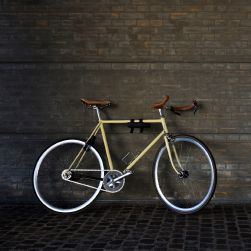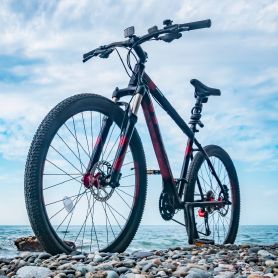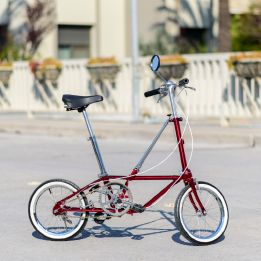




Will this cutting edge technology benefit motorists, cyclists and pedestrians alike in the long run?
The new system is an enhancement of the present detection and auto brake technology, and the package will be called Pedestrian and Cyclist Detection with full auto brake. All cars equipped with pedestrian detection will also incorporate cyclist detection.
Doug Speck, Senior Vice President Marketing, Sales and Customer Service at Volvo Car Group, said, “As the leader in automotive safety, we have been first in the industry with all detection and auto brake technologies, from the first-generation brake support in 2006 to pedestrian detection with full auto brake in 2010."
Counteracts accidents
According to accident data, about 50 per cent of all cyclists killed in European traffic have collided with a car - a number that is counteracted by Volvo Cars' new Pedestrian and Cyclist Detection technology.
New advanced software, including more rapid vision processing, has made it possible to extend the present detection and auto brake technology to cover also certain cyclist situations.
Combining camera and radar
Pedestrian and Cyclist Detection with full auto brake consists of a radar unit integrated into the car's grille, a camera fitted in front of the interior rear-view mirror and a central control unit. The radar's task is to detect objects in front of the car and to determine the distance to them. The camera determines the type of the objects. Thanks to the dual-mode radar's wide field of vision, pedestrians and cyclists can be detected early on. The high-resolution camera makes it possible to spot the moving pattern of pedestrians and cyclists. The central control unit continuously monitors and evaluates the traffic situation.
The auto brake system requires both the radar and the camera to confirm the object. With the advanced sensor technology, it is then possible to apply full braking power immediately when necessary. The technology also covers vehicles driving in the same lane.
Read the full story here.
Information: Oneshift.com
Photo credit: Volvo Car Group
How would this affect cars behind the volvo? Say a malfunction, causes car to auto-jam brake. Or a cyclist swerves into the lane but driver can swerve further out onto another lane to avoid the accident. Instead, the car brakes and a cement truck behind cannot stop in time. Maybe a second computer can determine the distance behind volvo's rear end and following car's front bumper to evaluate what is the best course of action (immediate brake vs other evasive measures)